
Retatrutide Dosage Calculator
Vial Size
Bacteriostatic Water
Desired Dosage
Syringe Size

0.3 ml (30 units)

0.5 ml (50 units)

1.0 ml (100 units)
...
...
...
...
Calculating...
Ready to Order?
Fast shipping and secure checkout.
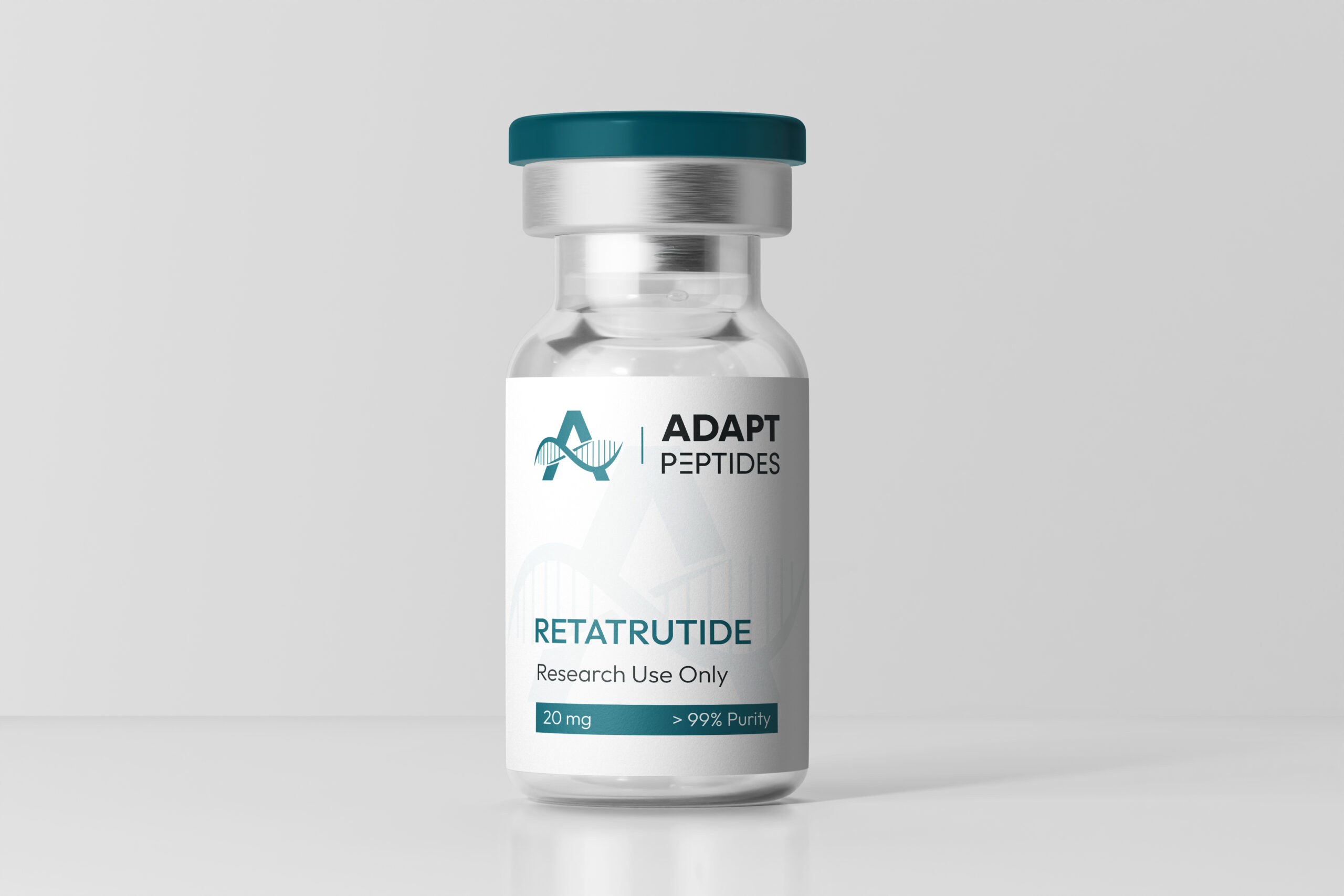 Retatrutide Lyophilized Powder - Research Use Only
Vials: 5mg / 10mg / 15mg / 20mg
The Essential Retatrutide Dosing & Measurement Calculator
Welcome to the definitive resource for precision peptide preparation in laboratory and research settings. Our Retatrutide dosing calculator is a powerful, proprietary instrument specifically built to eliminate guesswork and ensure absolute accuracy in your work. It seamlessly handles every complex calculation required for vial reconstitution, volume calculation, and peptide concentration analysis. By automating the conversions between milligrams (mg), micrograms (mcg), milliliters (mL), and insulin syringe units, this tool provides quick, reliable results essential for consistent research protocols.
Understanding Retatrutide Terminology and Vial Sizes
To capture the different titles and dosage levels used by various retailers, the following table provides a clear overview of common abbreviations and synonyms. This informational resource ensures researchers know exactly what strength of peptide they are referencing or purchasing, regardless of the vendor’s label.
| Abbreviation / Retailer Title Keywords | Actual Meaning | Common Vial Size (mg) |
|---|---|---|
| Reta 5mg / 5mg Reta / RTR 5mg / GLP-1 R 5mg / Triple G 5mg | Retatrutide 5mg Lyophilized Powder | 5mg |
| Reta 10mg / 10mg Reta / RTR 10mg / GLP-1 R 10mg / Triple G 10mg | Retatrutide 10mg Lyophilized Powder | 10mg |
| Reta 15mg / 15mg Reta / RTR 15mg / GLP-1 R 15mg / Triple G 15mg | Retatrutide 15mg Lyophilized Powder | 15mg |
| Reta 20mg / 20mg Reta / RTR 20mg / GLP-1 R 20mg / Triple G 20mg | Retatrutide 20mg Lyophilized Powder | 20mg |
| Reta 30mg / 30mg Reta / RTR 30mg / GLP-1 R 30mg / Triple G 30mg | Retatrutide 30mg Lyophilized Powder | 30mg |
| Reta 40mg / 40mg Reta / RTR 40mg / GLP-1 R 40mg / Triple G 40mg | Retatrutide 40mg Lyophilized Powder | 40mg |
| Reta 50mg / 50mg Reta / RTR 50mg / GLP-1 R 50mg / Triple G 50mg | Retatrutide 50mg Lyophilized Powder | 50mg |
Why Precision in Peptide Dosing Matters for Researchers
In the realm of advanced research compounds, meticulous detail is non-negotiable. Manual conversions and calculations when preparing a Retatrutide dose are highly susceptible to human error. A single mistake in converting a mg vial size into mcg, or miscalculating the mL required for a U-100 syringe, can lead to wasted product, compromised study integrity, and inconsistent data.
Our peptide dosing tool offers a green-light solution to this challenge, ensuring every calculation is consistent and easy to verify:
Determine Final Concentration (mcg/mL): Calculate the exact strength of your solution after adding bacteriostatic water.
Verify Required Draw Volume: Instantly translate your desired mcg dose into a precise mL volume and the corresponding syringe units (e.g., 10 units, 25 units).
Estimate Total Vial Yield: Accurately forecast the Total Doses per Vial available from your source material.
Handle All Syringe Types: Adapt calculations for 0.3mL (30 units), 0.5mL (50 units), and 1.0mL (100 units) syringes.
How Our Retatrutide Dosing Calculator Works
The process is designed for speed and reliability, requiring only four simple inputs from the researcher:
Retatrutide Vial Size: Enter the total mg quantity of the lyophilized peptide you are reconstituting (e.g., 10mg, 20mg, or 40mg).
Added Bacteriostatic Water (Bac Water): Specify the mL volume of solvent used for mixing. This input is critical for accurate Retatrutide dilution calculations.
Required Retatrutide Dosage: Input your target dose in micrograms (mcg).
Syringe Size: Select the maximum capacity of the insulin syringe being used for final measurement.
Once these fields are populated, the calculator instantly displays the Final Concentration, the Dose Volume Needed, and the calculated Total Doses per Vial. This saves valuable lab time and eliminates mathematical uncertainty.
Deeper Dive: Specialized Functions for Researchers
To address the wide range of queries scientists and informed buyers have, our tool combines several essential functions into one powerful interface:
1. The Retatrutide Reconstitution Calculator: Setting the mcg/mL Standard
Accurate reconstitution is the first and most critical step. Our Retatrutide reconstitution calculator handles the complex mg to mcg conversion and division instantly.
Understanding Dilution: The amount of bacteriostatic water (Bac water) you add determines the final strength. The calculator serves as a precise Retatrutide dilution calculator, showing exactly how a higher or lower mL volume of solvent impacts the mcg/mL concentration.
Example: A 10mg vial mixed with 1mL yields 10,000mcg/mL. That same 10mg vial mixed with 2mL instantly shows a concentration of only 5,000mcg/mL. This transparent demonstration of the Retatrutide mixing ratio is vital for dosage planning.
Addressing Bac Water Queries: Researchers frequently ask, “How much Bac water for 10mg Retatrutide?” Our calculator answers this by letting you test various water volumes until you achieve the desired concentration for your specific research goals.
Practical Reconstitution Scenarios: Vial Size vs. Concentration
Understanding the relationship between vial size and Bac water volume is essential for reproducible results. Below are common scenarios for 10mg and 40mg vials, demonstrating how the Retatrutide concentration calculator output changes with dilution.
Retatrutide 10mg Reconstitution Example:
1.0mL Bac Water: Results in a high concentration of 10,000mcg/mL. This is ideal for researchers requiring very small injection volumes for higher doses.
2.0mL Bac Water: Halves the strength to 5,000mcg/mL. This creates a more dilute solution, which is easier to measure accurately for lower mcg doses.
Retatrutide 40mg Reconstitution Example:
1.0mL Bac Water: Results in a very high concentration of 40,000mcg/mL. This requires extreme precision during drawing, as the entire 40mg is packed into a tiny volume.
4.0mL Bac Water: Yields 10,000mcg/mL. By adding 4mL, the concentration is equalized to the 10mg/1mL scenario, making dose volumes familiar for the researcher.
2. The Retatrutide Dose Measurement Tool: Volume-to-Unit Conversion
Once the solution concentration is known, the focus shifts to drawing the correct amount. Our Retatrutide dose calculator is the ultimate mcg to volume converter.
Dosing Clarity: It translates the research protocol’s mcg dose directly into the liquid volume (mL) required.
Syringe Unit Precision: The result is simultaneously displayed in U-100 syringe units. This Retatrutide dosing calc feature removes the need for mental arithmetic between mL and units, a common source of error in a laboratory setting.
Study Consistency: For long-term projects, using the Retatrutide dose calculator ensures that every single injection volume is identical, supporting the integrity and repeatability of your research data.
Choosing the Right Syringe for Retatrutide Dosing
The correct syringe choice is pivotal for accuracy, especially when working with high-potency research compounds. All insulin syringes are calibrated as U-100 syringes, meaning 100 units equals exactly 1mL of liquid.
| Syringe Size (mL) | Capacity (Units) | Best For: | Reta Dose Volume |
|---|---|---|---|
| 0.3mL | 30 units | Measuring very small doses (under 1,500mcg at 5,000mcg/mL) where maximum precision is needed. | The preferred choice for micro-dosing research. |
| 0.5mL | 50 units | Mid-range doses or titration protocols where the volume is slightly larger. | Offers a good balance between capacity and readability. |
| 1.0mL | 100 units | Larger doses or high dilution protocols. | Use with caution; the markings are spaced further apart, reducing precision for small doses. |
Our calculator adapts to the syringe selected, ensuring the displayed units are always relevant to the physical tool you are using, eliminating errors during the final draw phase of your Retatrutide dose planning.
3. The General Peptide Calculator: Versatile Research Support
Though tailored for Retatrutide, the underlying mathematical principles (concentration, dilution, dose volume) are consistent across a wide range of lyophilized compounds. This tool serves effectively as a general peptide calculator for researchers working with multi-agonist molecules or other investigative peptides. It provides a standardized platform for accurate math, ensuring that calculations for various peptide research protocols remain organized and error-free.
Diluent Comparison: Bacteriostatic Water vs. Sterile Water vs. Saline
When reconstituting lyophilized peptides like Retatrutide for research, the choice of diluent is critical, as it directly impacts the solution’s stability and longevity. While several liquid solutions exist, Bacteriostatic Water for Injection (BWFI) is overwhelmingly the standard choice for long-term peptide research.
Why Researchers Prefer Bacteriostatic Water
| Diluent | Contents | Shelf Life of Peptide (Approximate) | Research Suitability |
|---|---|---|---|
| Bacteriostatic Water (Bac Water) | Water + 0.9% Benzyl Alcohol (BA) | 14 to 28+ days (when refrigerated) | Standard choice. The Benzyl Alcohol acts as a preservative, inhibiting bacterial growth, which is essential for multi-dose vials used over several weeks. |
| Sterile Water for Injection | Pure H2O | 24 to 72 hours (maximum) | Poor. Lacks a preservative. Once the sterile seal is broken, it becomes a high-risk medium for rapid bacterial proliferation, compromising research integrity. |
| Saline (Sodium Chloride 0.9%) | Water + Salt (NaCl) | Short-term (similar to sterile water) | Unsuitable. The salt content is unnecessary and can sometimes interact unfavorably with specific peptide structures or affect stability, despite being isotonic. |
The Critical Role of Benzyl Alcohol (BA)
BWFI contains 0.9% Benzyl Alcohol. The BA is a key preservative that prevents microorganisms from growing once the vial’s rubber stopper has been pierced (known as multi-dosing). For any peptide research requiring accurate measurement and use over a period longer than a few days, Bacteriostatic Water is the only reliable choice to maintain sterility and the integrity of the reconstituted solution.
Advanced Troubleshooting and Laboratory Tips
Even with the most precise Retatrutide dosing calculator, successful research preparation requires careful technique. This section addresses common challenges and offers solutions to maintain protocol integrity. This acts as a vital Retatrutide reconstitution troubleshooting guide.
Common Calculation and Measurement Pitfalls
Confusing mg vs. mcg: This is the most common error. The calculator requires the Vial Size in milligrams (mg) but the Required Dosage in micrograms (mcg). Always remember: 1mg = 1,000mcg. If you enter 20mg as 20mcg, all subsequent calculations will be wildly inaccurate.
The “Floored” Dose Count: Our calculator shows the Total Doses per Vial using a “floor” function (rounding down). This ensures you only count full, measurable doses. For instance, if the total math yields 20.8 doses, the calculator will display 20. This prevents researchers from accidentally drawing a partial, under-dosed final injection.
Syringe Capacity Exceeded: If the output box displays a warning that the required units exceed your selected syringe size (e.g., 45 units required on a 30 unit syringe), you must either increase the Bac water volume (to dilute the concentration) or use a larger syringe size (0.5mL or 1.0mL).
Best Practices for Reconstitution (The Bac Water Process)
The method of mixing the lyophilized powder with Bac water directly impacts solution integrity:
Preparation: Always allow the Retatrutide vial and Bac water to reach room temperature before mixing.
Slow Addition: Inject the Bac water slowly and gently down the side of the Retatrutide vial. Injecting directly onto the powder can damage the fragile peptide structure.
Mixing: Never shake the vial. Gently roll the vial between your palms for several minutes until the lyophilized pellet is fully dissolved. Shaking introduces air bubbles and can compromise the integrity of the peptide.
Wait Time: Allow the reconstituted vial to sit for 5 to 10 minutes before drawing the first dose. This ensures the peptide is fully dissolved and stabilized, guaranteeing the concentration matches the calculation provided by the Retatrutide dilution calculator.
Comprehensive Step-by-Step Research Protocol
For high-level research integrity, every step of the Retatrutide preparation must be standardized. This detailed protocol uses the outputs from our Retatrutide dosing calculator to ensure maximum consistency from powder to final measurement.
Phase 1: Preparation and Tool Verification
Calculate Parameters: Use the Retatrutide dosing calculator to determine the exact volume of Bac water required to achieve the desired mcg/mL concentration.
Example: If a 20mg vial requires a 10,000mcg/mL concentration, the calculator confirms you must add 2.0mL of Bac water.
Verify Syringe Units: Note the resulting dose volume in U-100 syringe units. This is the critical number for the final draw.
Gather Materials: Ensure you have the Retatrutide lyophilized powder vial, the correct volume of Bacteriostatic Water for Injection (BWFI), a sterile syringe for drawing the Bac water, and the appropriate small U-100 syringe (0.3mL or 0.5mL recommended for accuracy) for the final dose measurement.
Sterilization: Wipe the rubber stoppers of both the Retatrutide vial and the Bac water vial with alcohol wipes and allow them to air dry completely to maintain a sterile research environment.
Phase 2: Reconstitution (Mixing the Peptide)
Draw Diluent: Using the large, sterile syringe (e.g., 3mL or 5mL syringe), draw the exact volume of Bac water determined in Step 1.
This is the step for Retatrutide mixing ratio calculation. Using the exact volume ensures the final mcg/mL strength matches the calculator’s prediction.
Inject Slowly: Carefully pierce the rubber stopper of the Retatrutide vial. Inject the Bac water very slowly down the inner wall of the glass vial. Do not shoot the water directly onto the powder pellet, as the force can potentially denature the delicate peptide structure, compromising the integrity of the Reta research product.
Dissolution: Remove the syringe. Gently roll the vial between your fingers and thumbs for 2 to 5 minutes. The lyophilized powder should dissolve fully, resulting in a clear solution. Do not shake the vial violently. The solution must be perfectly clear, indicating full dissolution.
Stabilization: Place the reconstituted Retatrutide solution in the refrigerator (2 to 8 degrees Celsius). Allow 15 to 20 minutes for the solution to fully stabilize before drawing the first dose.
Phase 3: Accurate Dose Measurement
Select Syringe: Use the smallest appropriate U-100 insulin syringe (0.3mL is often best for small doses) to maximize measurement precision.
Draw Dose: Pierce the rubber stopper of the reconstituted Retatrutide vial. Draw the precise number of U-100 units calculated by the Retatrutide dosing calculator (e.g., 15 units).
Remove Air: Carefully expel any air bubbles from the syringe. The liquid volume in the barrel must correspond exactly to the required U-100 units for the Reta 10mg or Reta 20mg protocol being studied.
Storage: Immediately place the remainder of the reconstituted Retatrutide back into cold storage. Proper refrigeration is vital for the long-term stability promised by the Bac water.
Extensive Retatrutide Dosing Calculator FAQ
This section provides in-depth answers to common and complex questions asked by research teams and informed peptide buyers, ensuring comprehensive coverage of related long-tail keywords.
Concentration and Dilution Questions
Q1: How do I calculate the concentration of my Retatrutide solution after mixing?
The final concentration is calculated using the formula: Total mcg in the vial divided by Total mL of Bac water added. Our Retatrutide concentration calculator automates this by converting the mg vial size into mcg (multiplying by 1,000). For example, a 40mg vial contains 40,000mcg. If you add 4mL of Bac water, the concentration is 40,000mcg / 4mL, resulting in 10,000mcg/mL. This concentration is the foundation for all subsequent Retatrutide dose measurements and is the key to accurate Reta 40mg reconstitution.
Q2: What is the ideal Bac water volume for a 10mg Retatrutide vial?
There is no single “ideal” volume, as it depends entirely on your required dose. For the widely searched Retatrutide 10mg reconstitution keyword, the most common volumes are 1mL or 2mL.
1mL of Bac water: Gives 10,000mcg/mL. This high concentration means you draw a very small volume for your target dose (higher precision risk).
2mL of Bac water: Gives 5,000mcg/mL. This lower concentration makes drawing slightly larger volumes easier and is often preferred for lower mcg protocols, enhancing the precision of the Retatrutide dose planning phase.
Q3: Why is my calculated reta dose volume so small?
If your calculated volume is very small (e.g., 3 units on a syringe), it is usually because you are targeting a small mcg dose from a very concentrated solution (high mg vial mixed with low mL water). For instance, if you reconstitute a Reta 50mg vial with just 1mL of water, the resulting 50,000mcg/mL concentration requires measuring micro-volumes. To increase the volume and reduce measurement difficulty, use the Retatrutide dilution calculator feature to test adding more Bac water.
Dosage and Syringe Questions
Q4: How do I convert my Retatrutide mcg dose into U-100 syringe units?
The conversion relies entirely on the concentration (mcg/mL) of your solution. Our calculator performs this in a single step:
Dose Volume (mL) = Desired Dose (mcg) / Concentration (mcg/mL)
Units = Dose Volume (mL) x 1000 (to get mL to U-100 units). This automated Retatrutide dosing calculation is the most valuable feature of the tool, ensuring the precise Retatrutide draw volume is translated directly into the markings you see on your insulin syringe.
Q5: Can I use a regular hypodermic syringe instead of an insulin syringe?
It is strongly advised against. Standard hypodermic syringes often lack the fine U-100 unit markings, making accurate measurement of small mcg doses nearly impossible. Insulin syringes (0.3mL or 0.5mL) are the correct instrument for accurate Retatrutide dose measurement due to their smaller capacity and finer unit graduation, ensuring the integrity of protocols for RTR 20mg and similar strengths.
Q6: What does the calculator mean by “Total Doses per Vial”?
This calculation shows the maximum number of full, complete doses you can obtain from the reconstituted vial, based on your target mcg dose. For example, if you have a 40mg vial (40,000mcg) and your protocol calls for a 2,000mcg dose, the total doses is 40,000 / 2,000 = 20 doses. This key feature aids in Retatrutide dose planning and inventory management.
Storage and Stability Questions
Q7: How long can I store my lyophilized (unmixed) Retatrutide powder?
The stability of lyophilized peptide is extremely high. When stored correctly in a freezer (-20°C or colder) and kept away from moisture and light, the powder can retain its full potency for several years. Always check the supplier’s Certificate of Analysis (CoA) for specific guidance on Retatrutide powder storage.
Q8: What is the optimal storage temperature for the reconstituted Retatrutide solution?
Once the peptide is reconstituted using Bac water, it must be stored in a refrigerator at 2°C to 8°C (36°F to 46°F). Do not freeze the solution once it is mixed, as the freeze-thaw cycle can compromise the peptide’s integrity. The Benzyl Alcohol in the Bac water maintains a safe, sterile environment for approximately 28 days when correctly refrigerated. Proper RTR solution storage is crucial for multi-week research protocols.
Q9: I accidentally shook my Retatrutide vial. Is the peptide ruined?
Violent shaking introduces shear forces that can potentially damage the delicate molecular structure of the peptide, leading to a loss of potency. While minor rolling is fine, aggressive shaking should be avoided. If you did shake it, observe the solution for cloudiness or foaming. Although the peptide might not be completely ruined, the integrity of the solution may be compromised, leading to inconsistent results. Use extreme care during the Retatrutide mixing process.
Important Research & Ethical Disclaimer
This Retatrutide dosing calculator is intended exclusively for research and educational purposes. It is designed for use by laboratories, academic teams, and informed buyers who require accurate, reproducible data for their non-clinical studies.
No Medical Guidance: This tool is not medical advice and is not intended for use in humans or animals.
Educational Context for Common Queries: We recognize that public interest is high, leading to search terms like “Retatrutide dosing calculator for weight loss” or “bodybuilding research”. In this context, the calculator’s function is purely educational, demonstrating how published clinical trial doses translate into measurable laboratory quantities (e.g., 2mg dose equals 0.2mL at a certain concentration). It does not provide guidance for clinical use, female dosing, or personal application.
Conclusion
The Retatrutide dosing calculator is an indispensable, free online resource for any researcher or laboratory working with this compound. It provides a reliable, fast, and transparent way to handle every calculation from reconstitution to final dose measurement. By simplifying complex math, eliminating errors, and supporting all common vial and syringe formats, this Retatrutide reconstitution calculator ensures precision, saves time, and allows your team to focus entirely on the integrity of your research project.